
How Digital Marketing Works: A Complete Step-by-Step Process Explained
How does digital marketing work? Learn the complete step-by-step digital marketing process, including SEO, content marketing, social media, email marketing, paid ads, funnels, and analytics—explained in simple language. how digital marketing works
Brand Boost
12/4/20254 min read
How Digital Marketing Works: A Complete Step-by-Step Process
If you are new to online business, you’re probably wondering: How does digital marketing work, and how do brands use it to get customers?
Digital marketing may look complicated from the outside, but the truth is, digital marketing works through a simple, structured, and predictable process that any business can follow.
In this in-depth guide, we will explain how digital marketing works step-by-step, how different channels support each other, and how companies use digital marketing strategies to attract traffic, convert leads, and generate revenue.
What Is Digital Marketing?
Before understanding how digital marketing works, you must know what it means.
Digital marketing is the process of promoting products or services using online platforms like search engines, social media, email, websites, and paid ads.
It includes multiple components such as
SEO (Search Engine Optimization)
Content Marketing
Social Media Marketing
Paid Advertising (Google Ads, Meta Ads)
Email Marketing
Website Optimization
Analytics & Tracking
All these work together to create a strong digital presence.
How Digital Marketing Works: The Complete Process
Digital marketing follows a systematic process, whether for a small business, personal brand, or large enterprise.
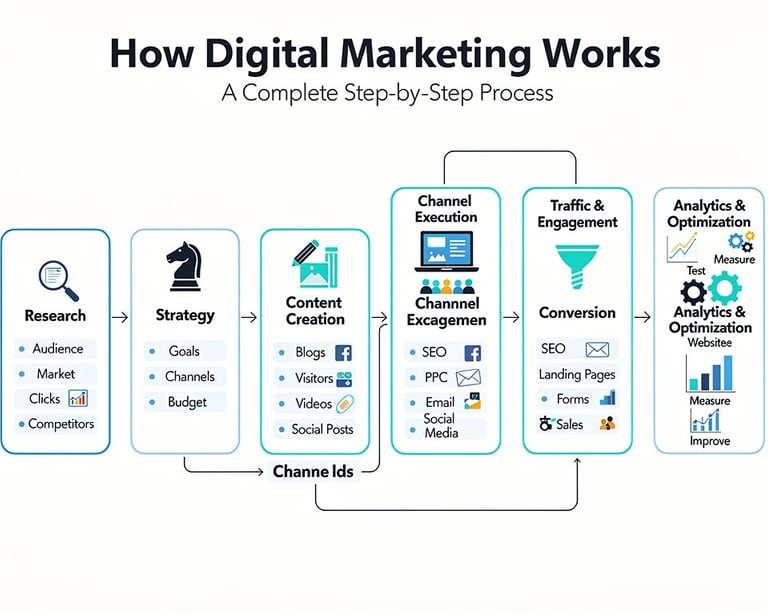
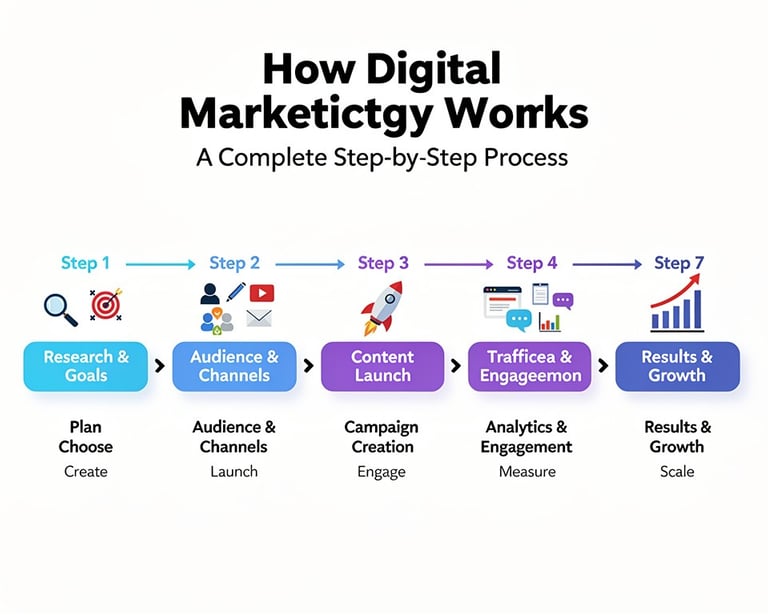
Here is the complete step-by-step digital marketing workflow:
1. Understanding the Target Audience
Digital marketing starts with knowing your audience.
Brands analyze:
Age
Interests
Location
Online behavior
Buying patterns
Pain points
Needs and desires
This helps create personalized campaigns.
Example:
If you run a digital marketing agency, your target audience may be business owners, startup founders, and eCommerce brands.
2. Defining Goals and Objectives
Businesses use digital marketing for multiple goals:
Increase website traffic
Generate leads
Build brand awareness
Increase sales
Improve customer engagement
Launch new products
Clear goals guide the entire strategy.
3. Building a Professional Website
Your website is the digital foundation of your brand.
A website should be:
Fast
Mobile-friendly
SEO-optimized
Clear and easy to navigate
Designed for conversions
Internal link suggestion:
If you have a blog about landing pages, link to it here.
4. Doing Keyword Research
Keyword research helps you understand what your audience is searching for on Google.
Tools like
Google Keyword Planner
Ahrefs
Ubersuggest
SEMrush
help you find the best keywords to rank for.
Keywords ensure your content matches user intent.
5. Creating a Digital Marketing Strategy
After research, businesses build a full digital marketing plan, including
SEO strategy
Content plan
Social media plan
Paid ad strategy
Email funnel strategy
Conversion optimization strategy
This acts as the blueprint for the entire process.
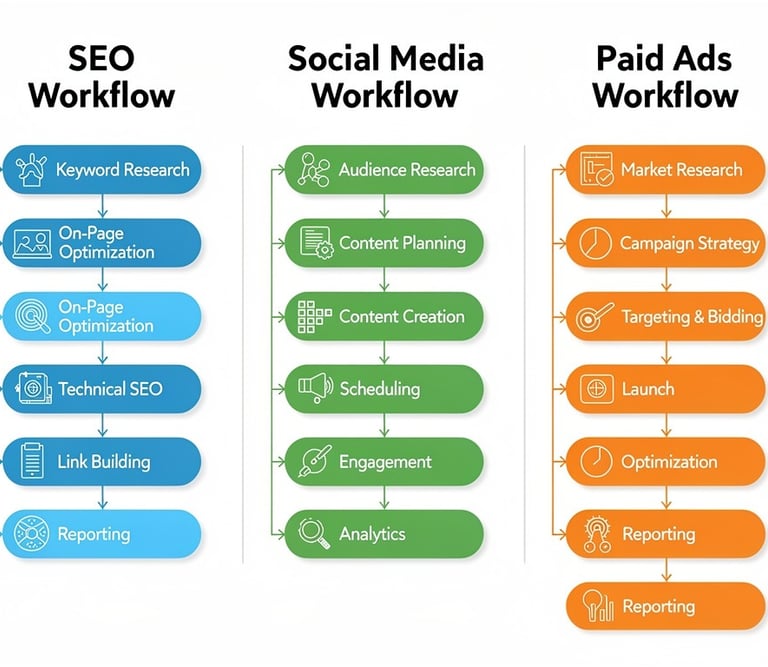
6. Search Engine Optimization (SEO)
SEO is one of the most important components of how digital marketing works.
SEO includes:
On-page optimization
Off-page optimization
Technical SEO
Link building
Content optimization
When done right, SEO helps you rank high on Google and attract organic traffic.
7. Content Marketing
Content marketing is the engine that powers all digital marketing.
Brands create content such as
Blogs
Articles
Videos
Infographics
Social media posts
Ebooks
Guides
✔ Educate your audience
✔ Build trust
✔ Improve SEO
✔ Generate leads
Remember:
Content is what attracts your audience.
8. Social Media Marketing
Social media platforms help businesses reach a large audience.
Popular platforms:
Instagram
Facebook
LinkedIn
YouTube
Twitter
Pinterest
Social media helps with:
Engagement
Brand awareness
Community building
Product promotion
Traffic generation
This is where users interact with the brand daily.
9. Paid Advertising
Paid marketing speeds up results.
Forms of paid ads:
Google Search Ads
Facebook & Instagram Ads
YouTube Ads
Display Ads
Retargeting Ads
Paid ads help businesses get fast visibility and conversions.
10. Email Marketing & Automation
Email marketing is one of the most powerful digital marketing tools.
Businesses send:
Welcome emails
Promotional emails
Newsletters
Automated sequences
Abandoned-cart emails
Email marketing works because it builds long-term relationships and repeated sales.
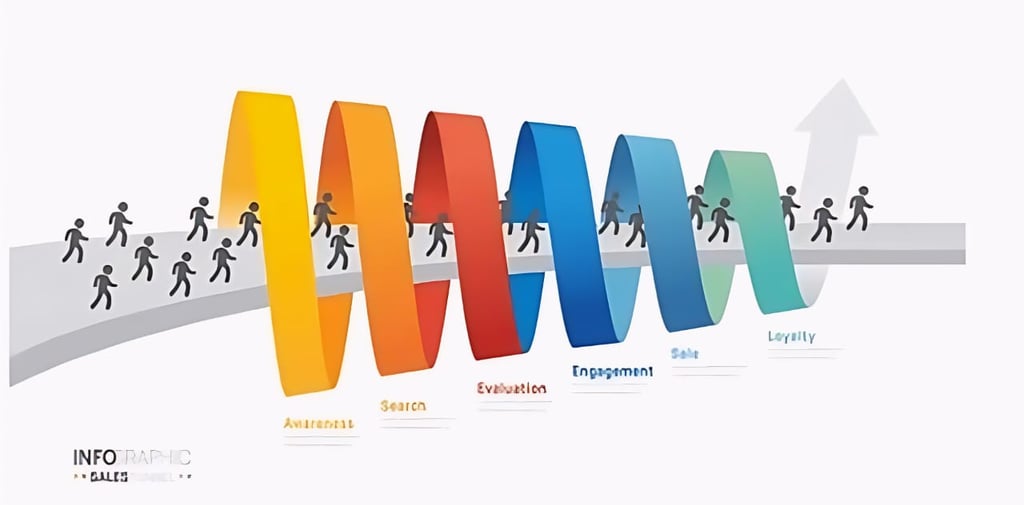
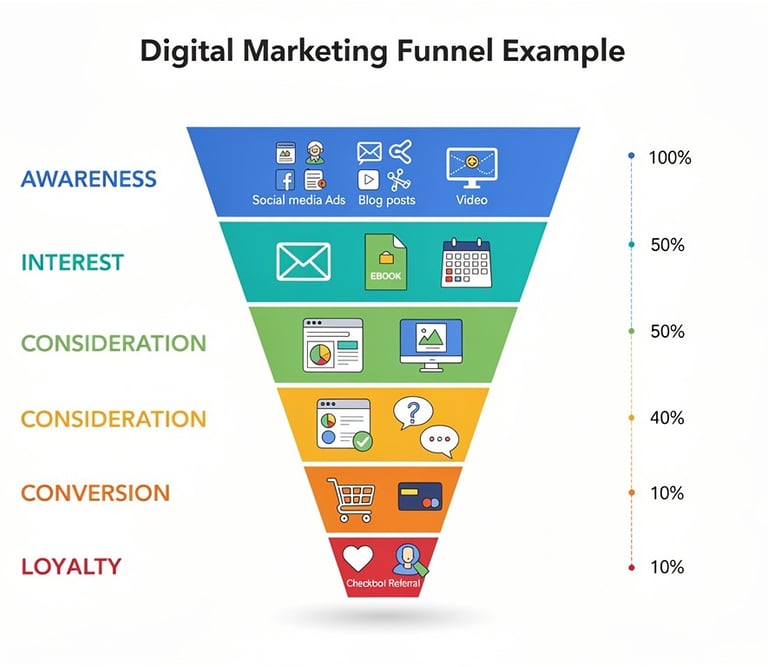
11. Creating a Sales Funnel
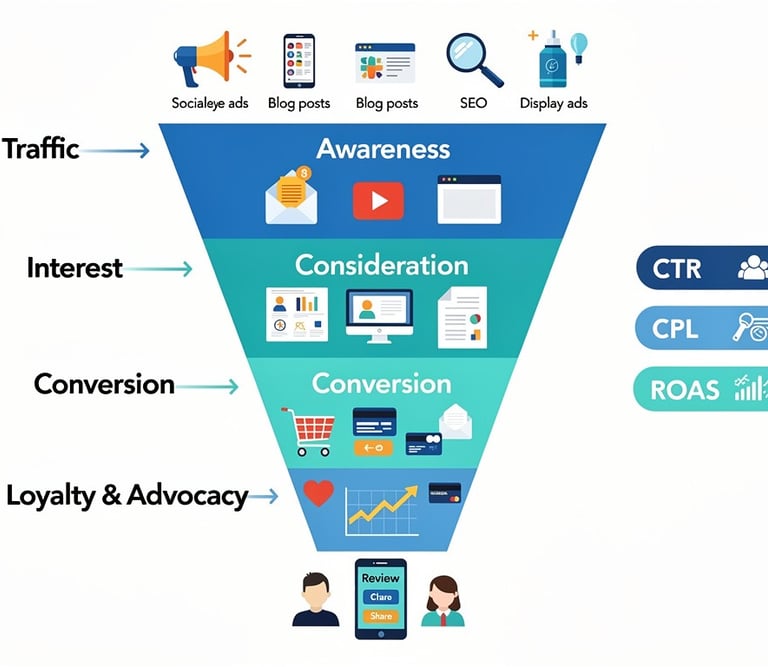
A digital marketing funnel shows the customer journey.
Stages of a Digital Marketing Funnel:
Awareness – Users learn about the brand
Interest—They engage with content
Consideration—They compare options
Conversion – They make a purchase
Retention—They become repeat customers
Funnels are the key to revenue.
12. Conversion Rate Optimization
CRO improves the percentage of visitors who become customers.
CRO includes:
A/B testing
Improving website speed
Better landing page design
Clear CTAs
Persuasive copywriting
CRO ensures that businesses get the most results from their traffic.
13. Analytics & Performance Tracking
Tools like
Google Analytics
Google Search Console
Hotjar
Facebook Ads Manager
Help track:
Traffic
Clicks
Conversions
User behavior
Sales
Engagement
Digital marketing is data-driven—analytics guide improvements.
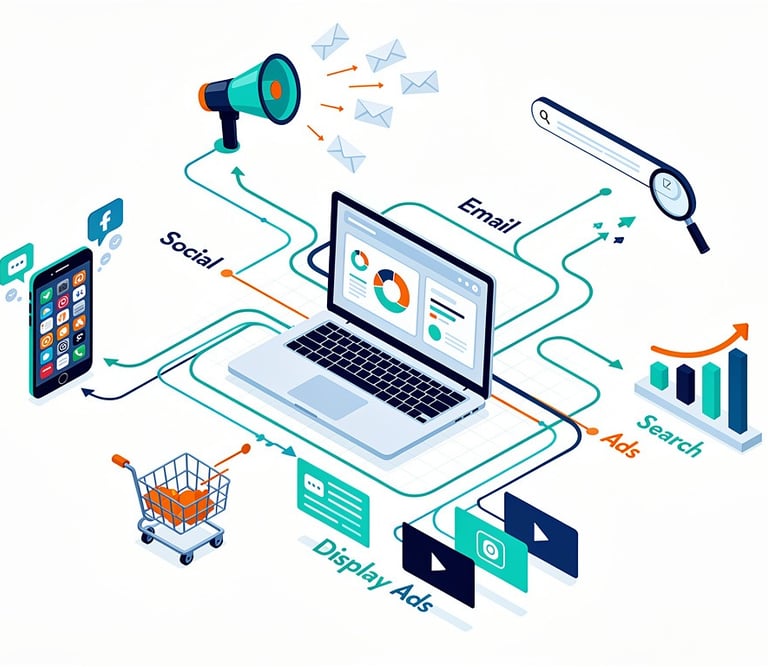
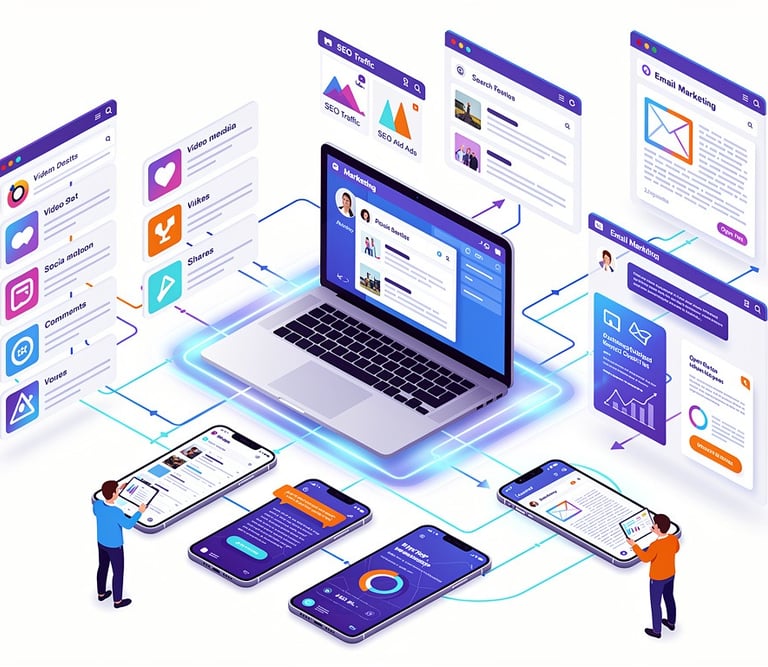
How Digital Marketing Channels Work Together
Digital marketing works best when channels support each other.
Example:
SEO brings organic traffic
Content educates users
Social media drives engagement
Paid ads bring quick leads
Email nurtures leads into customers
Analytics optimize results
This integrated system is what makes digital marketing powerful.
Benefits of Digital Marketing for Businesses
Digital marketing gives businesses HUGE advantages:
✔ Cost-effective
✔ Global reach
✔ Targeted audience
✔ Measurable results
✔ Faster growth
✔ Strong brand visibility
✔ Higher sales and conversions
Every business—small or large—can grow using digital marketing.
Digital marketing process explained
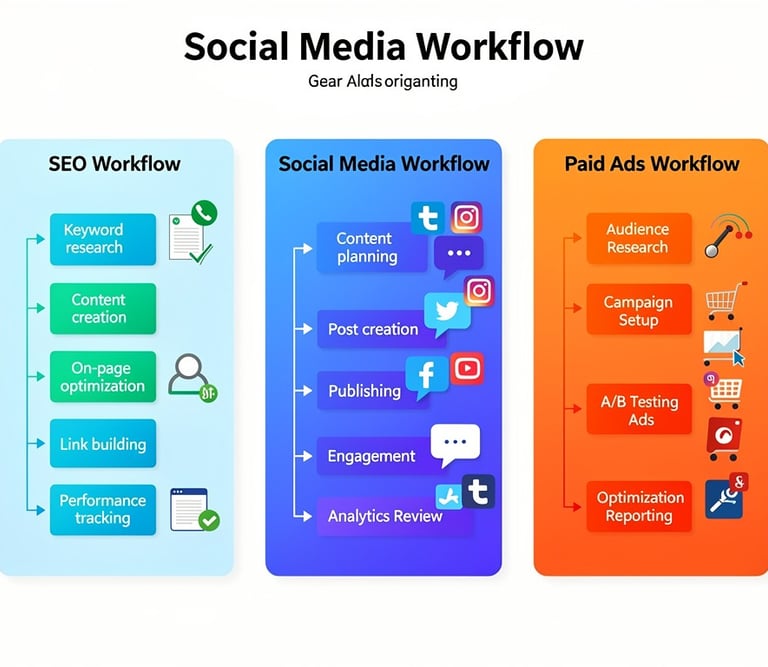
SEO, social media, and paid ads workflow
Digital marketing funnel example
Digital marketing channels interaction
Conclusion: How Digital Marketing Works
Digital marketing works through a strategic process of understanding the audience, creating valuable content, optimizing visibility, using social media and paid ads, nurturing leads through email, and analyzing performance to improve results.
Whether you run a small business, agency, or personal brand, digital marketing helps you attract customers, increase sales, and grow consistently in the digital age.

Address
11, 18th Main Road,
BTM Stage - 1,
Narayangowda Layout,
Taverekere, Bangalore,
KA - 560029
Important Links
Leave Details


All Rights Reservered.