
SEO vs Paid Advertising: Which Strategy Drives Better Results? | Brand Boost
Discover whether SEO or paid advertising drives better results for your business. Compare cost, ROI, long-term impact, and strategies to make informed digital marketing decisions. SEO vs Paid Advertising
Brand Boost
11/29/20254 min read

Introduction
In the world of digital marketing, businesses often face the choice between SEO vs paid advertising. Both strategies can drive traffic, increase brand awareness, and generate leads, but they function differently and have unique benefits and challenges. Choosing the right approach—or combining both—depends on your business goals, budget, and timeline.
This article will provide a comprehensive comparison between SEO and paid advertising, highlighting their advantages, limitations, and best practices for achieving maximum results.
Understanding SEO and Paid Advertising
Before comparing results, it’s important to understand what each strategy involves.
What is SEO?
Search Engine Optimization (SEO) is the process of optimizing your website and content to rank higher on search engine results pages (SERPs) organically. SEO involves:
Keyword research
On-page optimization (meta tags, headings, images, internal linking)
Content creation
Technical SEO (site speed, mobile optimization, structured data)
Link building
Benefits of SEO:
Long-term, sustainable traffic
Higher trust and credibility
Cost-effective in the long run
What is Paid Advertising?
Paid advertising, often called PPC (pay-per-click), involves placing ads on search engines or social media platforms to drive targeted traffic immediately. Key components include:
Google Ads / Bing Ads
Social media ads (Facebook, Instagram, LinkedIn)
Display ads and retargeting campaigns
Bid management and ad copy optimization
Benefits of Paid Advertising:
Instant visibility on SERPs
Highly targeted audience reach
Measurable ROI and performance tracking
SEO vs Paid Advertising: Key Differences
Understanding the differences helps businesses decide which strategy aligns with their objectives.
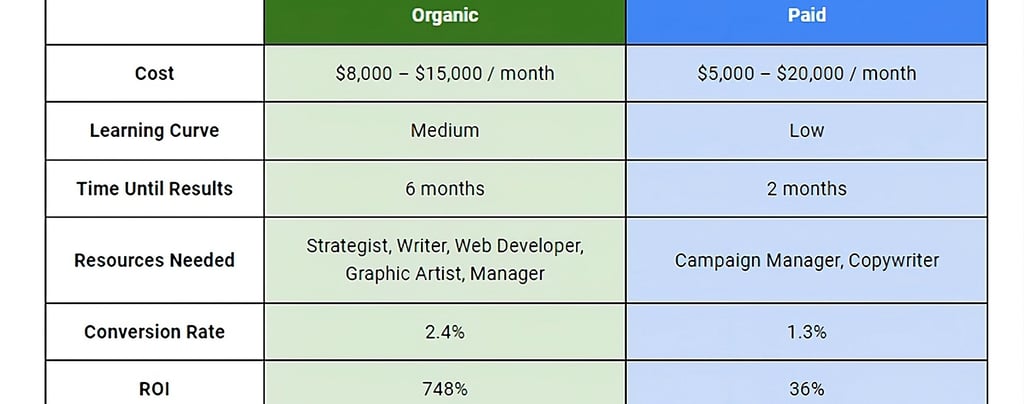
Factor SEO Paid Advertising Cost Low to medium (time & resources) High, based on bids & competition Speed of Results Slow, may take months Immediate traffic and leads Sustainability Long-term benefits Only works while budget is active Trust & Credibility Higher, organic results perceived as more credible Perceived as ads; trust depends on targeting & design Measurability Analytics can track performance over time Detailed tracking with ROI metrics Flexibility Harder to adjust quickly Easy to adjust campaigns instantly
organic search vs paid search, PPC vs SEO ROI, SEM vs SEO
Cost Comparison
When considering SEO vs paid advertising, cost is a major factor:
SEO requires investment in content creation, technical optimization, and link-building. While initial costs can be high, the traffic generated is free in the long run.
Paid advertising offers instant traffic but requires continuous funding. For competitive keywords, CPC (cost-per-click) can be expensive.
See oor complete portfolio here
H2: Traffic and Lead Quality
Both strategies drive traffic, but the quality differs:
SEO: Attracts users actively searching for information or solutions, often resulting in higher engagement and trust.
Paid Ads: Can target specific demographics and behaviors, driving highly targeted traffic but may require retargeting to convert.
Example:
A user searching “best SEO tools for small business” is likely to convert organically via SEO, while paid campaigns can capture users with precise demographics for quick conversion.
ROI and Long-Term Impact
SEO delivers a long-term ROI as content continues to attract traffic months or years after publication.
Paid advertising gives immediate ROI but stops producing results once the budget ends.
Hybrid Approach: Combining SEO and paid ads can maximize results:
Use paid ads for high-competition keywords
Invest in SEO for sustainable traffic
PPC vs SEO ROI
Advantages and Challenges
Advantages of SEO
Sustainable, long-lasting traffic
Builds brand credibility
Low cost per acquisition over time
Challenges of SEO
Slow to produce results
Requires ongoing content and link-building efforts
Algorithm changes may affect rankings
Advantages of Paid Advertising
Instant visibility and leads
Highly customizable targeting
Easily measurable performance
Challenges of Paid Advertising
Can be expensive in competitive niches
Traffic stops when budget ends
Ad fatigue and banner blindness
When to Use SEO vs Paid Advertising
Use SEO when:
You want long-term traffic growth
Your audience searches actively for your products/services
You want to build credibility and trust
Use paid advertising when:
You need immediate results
Launching a new product or campaign
Targeting competitive keywords
Contact us for more information
Combining SEO and Paid Advertising
The best strategy often involves a combination:
SEO builds organic authority and long-term traffic
Paid ads supplement traffic for immediate impact and testing
Example: Use paid ads to test keywords and identify high-converting topics, then optimize SEO content around those keywords.
Learn more about SEM vs SEO
Conclusion
Choosing between SEO vs paid advertising depends on your goals, budget, and timeline. For long-term growth and credibility, SEO is ideal. For immediate traffic and precise targeting, paid advertising is highly effective. The most successful digital marketing strategies often blend both approaches, leveraging the strengths of each to maximize ROI and online visibility.






Address
11, 18th Main Road,
BTM Stage - 1,
Narayangowda Layout,
Taverekere, Bangalore,
KA - 560029
Important Links
Leave Details


All Rights Reservered.